
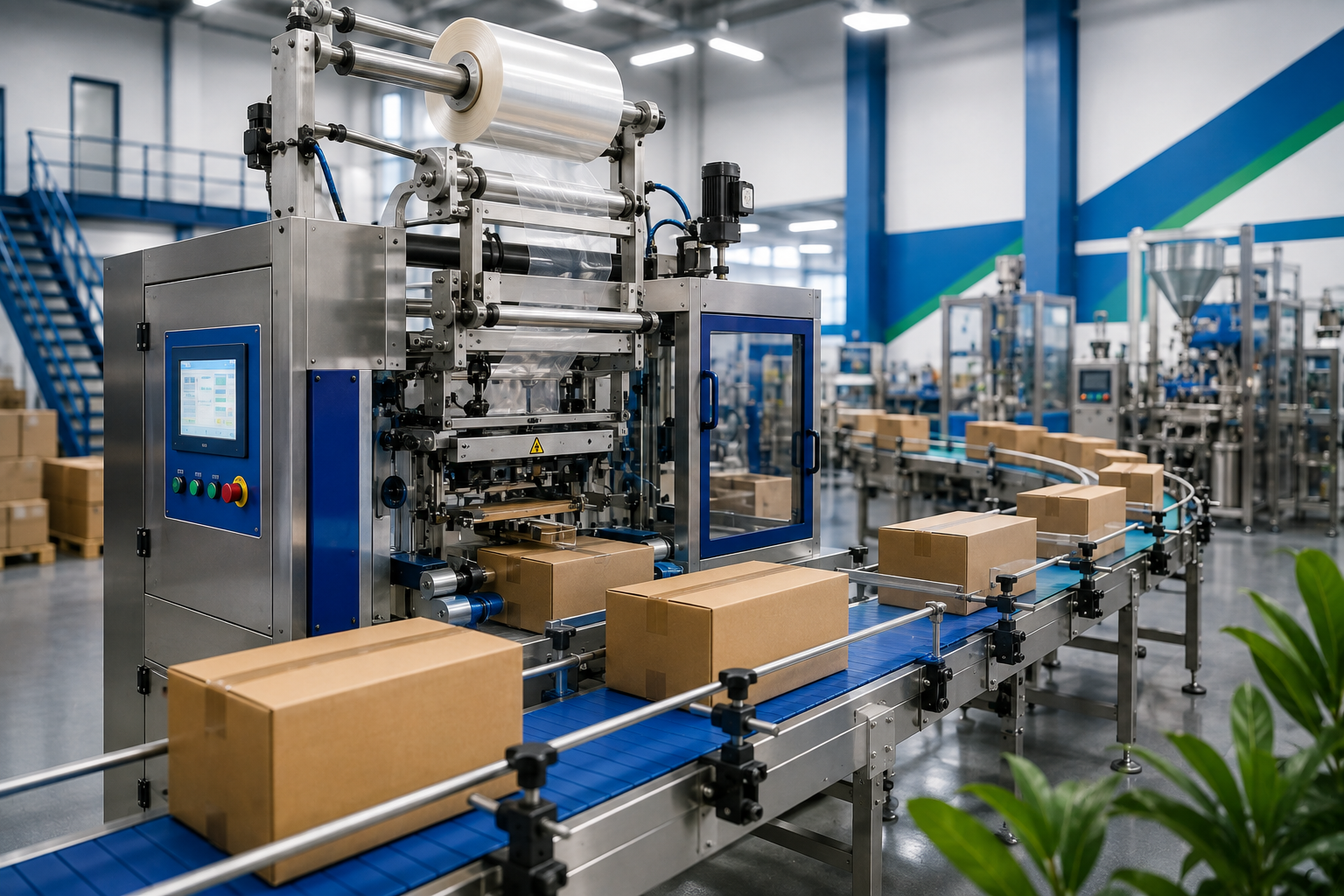
How Automation Is Transforming the Packaging Industry in Pakistan
Pakistan’s packaging industry is evolving as manufacturers look for faster production, consistent quality, better hygiene, and reduced operational waste. From food and FMCG to pharmaceuticals and consumer products, businesses are increasingly adopting packaging automation to streamline repetitive packaging tasks and improve overall production efficiency.
Automation is no longer limited to large-scale factories. Modern packing machines can help businesses achieve more consistent results while reducing dependence on manual processes.
What Is Packaging Automation?
Packaging automation involves using machinery, control systems, sensors, and integrated equipment to perform packaging tasks with minimal manual intervention. Depending on the production line, automated systems can handle weighing, filling, sealing, wrapping, labeling, coding, and other processes.
In Pakistan, automated packaging solutions are already being used across food processing, pharmaceutical, snacks, spices, dairy, and FMCG manufacturing. Existing industry solutions include automatic pouch packing, form-fill-seal, blister packaging, shrink wrapping, and integrated packaging lines.
Why Are Pakistani Manufacturers Moving Toward Automation?
1. Faster Production
Manual packaging can become a bottleneck when production volumes increase. Automated packing machines can perform repetitive operations at consistent speeds, helping manufacturers increase throughput and handle larger orders more efficiently.
2. Better Accuracy and Consistency
Automated weighing, filling, and sealing systems help maintain consistency between individual packs. This is particularly important for products sold by weight or volume, where inaccurate filling can increase product giveaway and affect profitability.
3. Reduced Packaging Waste
Precise machine control can help reduce errors involving product quantities, film, seals, and packaging materials. Modern packaging equipment is increasingly designed to improve material utilization while maintaining reliable pack quality.
4. Improved Hygiene and Product Safety
For food and pharmaceutical manufacturers, minimizing unnecessary manual handling is an important consideration. Automated packaging systems can support controlled production environments and consistent sealing processes, helping manufacturers maintain hygiene and product integrity.
5. More Efficient Use of Labor
Packaging automation does not simply mean replacing workers. Instead, it can shift employees away from repetitive manual tasks toward machine operation, quality control, maintenance, and production supervision. This can make better use of skilled workers while maintaining production efficiency.
The Role of Smart Packaging Technology
Modern packaging machinery is becoming more connected and data-driven. PLC controls, touchscreen interfaces, sensors, servo systems, and production monitoring can give operators greater control over packaging operations.
Integrated automation can also allow different machines within a production line to communicate with one another. This supports smoother material handling, filling, sealing, and downstream packaging processes.
Which Industries Can Benefit?
Several Pakistani industries can benefit from automated packaging solutions, including:
- Food and snack manufacturing
- Pharmaceutical production
- Spices and pulses
- Rice and flour packaging
- Dairy products
- Confectionery
- FMCG products
- Chemicals and consumer goods
The growing use of automated machinery across these sectors reflects the increasing need for reliable production capacity and consistent packaging standards.
The Future of Packaging Automation in Pakistan
As Pakistani manufacturers expand production and compete in increasingly demanding markets, automation will continue to play an important role in packaging operations. Businesses that invest in the right packaging automation technology can improve production speed, consistency, quality control, and material efficiency.
For manufacturers, the key is not simply choosing the most advanced machine. The right solution should match the product, packaging format, production volume, available space, and long-term business requirements. With the right automated packaging system, Pakistani manufacturers can build more efficient and scalable production lines.